
Views: 0 Author: Site Editor Publish Time: 2026-07-08 Origin: Site


The fabrication industry faces a rapid and permanent shift. Customers now demand high-tension materials like sintered stone, porcelain, and ultra-compact quartzite. Legacy, single-function cutting equipment struggles under this new workload. Traditional blades often crack fragile slabs. Manual transfers slow down daily output. You cannot merely increase capacity by adding another traditional saw to your shop. You need a strategic shift in how you process materials.
Modern fabrication requires moving away from isolated workstations. Continuous, automated production is the new standard. A unified multifunction system solves these workflow problems directly. It changes how shops view heavy capital expenditure. You effectively shift those initial purchase costs into predictable, long-term operational savings. You drastically lower material waste, machine downtime, and labor overhead. In this guide, you will learn exactly how upgrading your fabrication cell drives efficiency. We will explore bottleneck reduction, material handling risks, and realistic return on investment metrics.
Process Consolidation: Combining traditional blade cutting and waterjet technology eliminates dangerous and time-consuming manual slab transfers.
Material Yield: Software-driven nesting algorithms maximize slab usage, heavily reducing waste on expensive natural and engineered stones.
Labor Reallocation: Automated continuous processing allows skilled operators to manage multiple machines or focus on quality control rather than manual machine feeding.
Space Efficiency: Replacing two distinct machines with one multifunction center frees up highly valuable shop floor space for secondary processing.
Many stone shops still rely on a disconnected workflow. Operators use a standard saw for straight cuts. They then move the piece to a separate waterjet for intricate details. This siloed approach drains profitability in ways you might not immediately notice.
Moving slabs between a standalone bridge saw and a separate waterjet creates severe idle time. A blade finishes its straight cuts quickly. However, the slab must then sit on an A-frame. It waits for the waterjet to become available. This delay creates massive Work in Progress (WIP) backlogs. Your production floor becomes a parking lot for half-finished countertops. When machines wait on each other, your daily throughput drops significantly.
Every time you move a slab, you risk breaking it. Tensioned materials and fragile cutouts are highly vulnerable. Transporting a partially cut porcelain slab via forklift introduces heavy vibrations. Using a vacuum lifter between stations creates similar risks. A single stress fracture ruins the entire piece. You lose the raw material cost. You also lose the labor hours already invested in the initial cuts.
Paying two operators to run separate single-function machines hurts your bottom line. One technician watches a saw. Another technician watches a waterjet. This is a poor use of skilled labor. Automated cells change this dynamic completely. One technician easily manages an automated cell. They load the program, stage the slab, and let the machine work. This frees up your second operator to handle edge profiling, polishing, or quality control.
Shop floor square footage is incredibly expensive. Housing two distinct machines requires a massive footprint. You must account for two separate machine beds. You need two distinct safety perimeters. You also need intermediate staging areas for slabs moving between them. Calculate this hidden cost. Consolidating into one machine reclaims hundreds of square feet. You can use this newly available space for profitable secondary processing equipment.
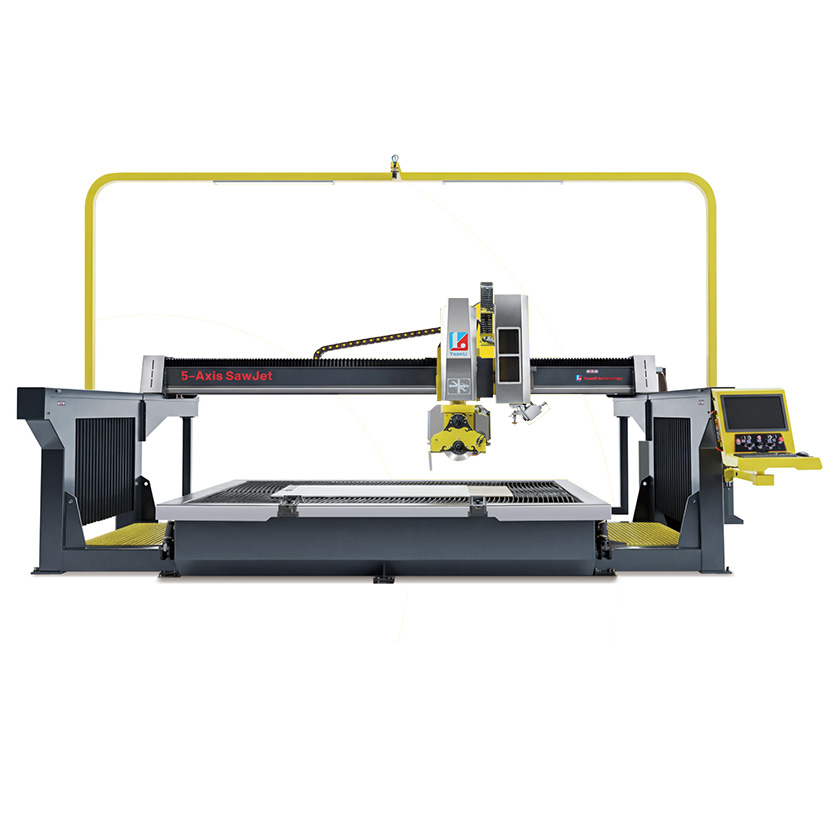
Upgrading your shop means embracing new capabilities. A Bridge Saw Waterjet Combo Machine integrates two distinct cutting philosophies into one seamless operation. This integration completely transforms how you approach complex custom designs.
Synergistic Cutting: The machine transitions seamlessly between tools. It uses a high-speed diamond blade for long, straight lines. It then switches instantly to a precision waterjet. The waterjet handles complex curves, sink cutouts, and sharp inner corners. The blade removes bulk material fast. The waterjet drops in to finish tight angles without overcutting into adjacent pieces.
Tension Relief on Modern Materials: Sintered stone, porcelain, and ultra-compact surfaces hold immense internal stress. Traditional blades often cause stress fractures upon entering the material. Waterjet combo systems solve this. The waterjet pierces the slab first. This safely relieves internal tension. The blade can then execute the straight cuts without shattering the expensive slab.
Intelligent Nesting & Vein Matching: Premium countertops require perfect vein alignment across seams. Integrated CAD/CAM software optimizes these cut paths automatically. The software nests parts tightly together. It matches natural stone veins digitally before any cutting begins. This enhances the premium value of the final installed product. You get better aesthetics and far less scrap material.
Automated Tool Management: Precision drops when operators must manually recalibrate tools. Combo machines feature onboard tool changers. They also utilize automatic thickness probes. The machine measures the slab thickness in real-time. It adjusts the tool height automatically. This maintains perfect precision across uneven natural stone slabs. Operators never have to stop the machine to measure blade wear manually.
Fabricators often fixate on the initial sticker price of a multifunction center. This mindset ignores long-term operational savings. You must look beyond capital expenditure. A unified system aggressively drives down daily running costs.
Optimizing your slab layout directly lowers raw material purchasing costs. Traditional sawing requires wide clearance lines between parts. Blades cannot make tight internal turns. A combo machine nests parts much closer together. The waterjet cuts the shared intricate lines. Fabricators routinely see yield improvements of up to twenty percent. On expensive quartzite or premium quartz, saving one extra slab per week pays for the machine upgrades rapidly.
Diamond blades and garnet abrasive are expensive. Using the wrong cutting method burns through consumables fast. A combo center optimizes both. You use the blade strictly for bulk straight cuts. You use the waterjet strictly for tight details. This prevents operators from forcing blades into awkward curves. It extends the life of expensive diamond tooling. It also reduces overall garnet consumption.
Siloed machines produce linear, limited output. An automated combo center unlocks exponential growth. Advanced shops utilize overnight "lights-out" processing. Operators stage a complex slab at the end of the shift. They press start and go home. The machine handles all straight cuts and sink cutouts autonomously. When the morning crew arrives, the finished parts are ready for edge polishing.
Premium machines feature variable-frequency drive (VFD) motors. These motors only draw maximum power when actively cutting dense material. They drop to low power during transit moves. Furthermore, modern closed-loop water recycling systems slash utility bills. The system captures, filters, and reuses the cutting water. This greatly reduces your municipal water draw and lowers environmental impact.
Operational Metric | Siloed Machine Approach | Multifunction Combo Center |
|---|---|---|
Material Yield | High waste due to overcut requirements | Maximum yield via tight software nesting |
Consumable Wear | Uneven blade wear from forced curves | Extended tool life via dedicated cutting modes |
Labor Requirement | Two operators required constantly | One operator managing an automated cell |
Throughput Potential | Limited strictly to manual shift hours | Capable of unattended "lights-out" processing |
Purchasing the machine is only the first step. Proper facility preparation ensures a smooth installation. You must understand the physical and technical demands of advanced CNC equipment. Skipping these prerequisites leads to massive operational headaches later.
These machines are incredibly heavy. They require strict reinforced concrete foundations. A standard shop floor may not support the weight of a waterjet tank full of water and steel. If the floor settles, the machine loses its multi-axis calibration. You must pour a dedicated, level concrete pad. You must also map out safety zones and overhead crane access before installation begins.
A high-pressure intensifier pump requires serious electrical power. You must evaluate your shop's electrical panel for adequate amperage drops. Spikes in power draw during pump startup can trip unprepared breakers. Additionally, the water feeding the pump must be pristine. You need dedicated water filtration systems. Hard water destroys high-pressure seals quickly. Softened, filtered water extends pump life dramatically.
Transitioning from manual cutting to advanced CAD/CAM software requires patience. Software platforms like AlphaCAM or Pegasus are incredibly powerful. However, they demand dedicated operator training. Do not expect your traditional sawyer to master 5-axis programming overnight. You must invest in structured training. The operator must learn digital templating, tool path generation, and collision avoidance.
High-performance machines require rigorous preventative maintenance. High-pressure waterjet lines undergo immense stress. Intensifier pumps require regular seal replacements. Precision CNC spindles need routine lubrication. Be completely transparent with your team about these schedules. Skipping a cheap filter change can destroy a very expensive high-pressure cylinder. Follow the manufacturer guidelines strictly.
System Component | Facility Requirement | Maintenance Priority |
|---|---|---|
Intensifier Pump | Clean, softened water supply; High amp electrical drop | Routine high-pressure seal & valve replacements |
CNC Spindle | Stable voltage; Compressed air supply | Bearing lubrication; Tool holder cleaning |
Water Tank | Reinforced 8-inch minimum concrete foundation | Regular abrasive garnet removal to prevent overflow |
Not all multifunction centers offer the same value. You must match the machine's capabilities directly to your daily product mix. Buying too little machine creates bottlenecks. Buying too much machine wastes capital.
You must decide between a standard 4-axis and a full interpolated 5-axis machine.
4-Axis Machines: Excellent for standard countertops. They handle straight cuts, simple sink holes, and flat work perfectly. They are generally more affordable and easier to program.
5-Axis Machines: Necessary for complex architectural stonework. The cutting head tilts and rotates simultaneously. This allows for mitered drop edges, curved profiles, and custom 3D shaping. Choose 5-axis only if your shop regularly sells premium custom edges.
Your new machine must communicate cleanly with your existing tools. If you use digital templating systems like Proliner or Laser Products, verify compatibility. The DXF files from your templater must flow directly into the machine's software. Forced manual file conversions cause data loss. They also introduce human error. Ensure the vendor guarantees seamless integration with your current digital workflow.
Even the best machines occasionally break down. When they do, your entire production stops. Evaluate vendors strictly on their Service Level Agreements (SLAs). Do they offer remote diagnostic capabilities? Can their engineers log into your machine to fix software bugs instantly? Ask about domestic parts warehousing. Waiting three weeks for a proprietary sensor from overseas destroys your monthly revenue. Demand guaranteed technician dispatch times before signing the purchase order.
A multifunction stone cutting center represents far more than a simple equipment upgrade. It is a calculated investment in risk mitigation, material efficiency, and labor optimization. You eliminate the physical dangers of moving fragile slabs between isolated stations. You squeeze more sellable product out of every expensive slab through intelligent nesting. You also free up your best workers to focus on quality rather than tedious machine feeding.
We advise fabricators to avoid looking solely at the initial sticker price. Base your final choice on a localized ROI analysis of your specific material throughput. Calculate your current waste, manual labor hours, and remake costs. You will quickly see how fast automated equipment pays for itself. Do not let outdated machinery hold your business back. Request a customized production audit today. Schedule a live demonstration of a combo machine cutting your toughest, most high-tension materials.
A: A standard combo machine typically requires a footprint of 20 by 25 feet. You must also account for mandatory safety perimeters. Light curtains and physical barriers need extra clearance. Always leave enough surrounding space for safe forklift access and overhead crane maneuvering during slab loading.
A: Yes, it is highly recommended. Sintered stone holds immense internal tension. Plunging a standard blade directly into the slab often causes catastrophic stress fractures. The waterjet component safely pierces the material first to relieve this tension. The blade can then finish straight cuts without shattering the slab.
A: Waterjet maintenance involves regular consumable replacements. You will routinely replace garnet mixing tubes and jewel nozzles. The intensifier pump requires rebuild kits for high-pressure seals every 500 to 1,000 hours, depending on water quality. Budgeting for these predictable wear parts ensures uninterrupted daily production.
A: A technician familiar with basic stone cutting can learn standard machine operations within two weeks. Mastering advanced CAD/CAM programming, complex 5-axis interpolation, and digital vein matching typically takes three to six months of consistent practice. Vendors usually provide the initial comprehensive onsite training.


