
Views: 0 Author: Site Editor Publish Time: 2026-10-21 Origin: Site


Step onto any high-production shop floor. You will likely see a newly installed cutting system tearing through thick steel plates. It looks incredibly impressive. Behind the scenes, however, the operator might be battling rapid seal wear or excessive energy bills. Investing in industrial fabrication equipment is a major financial decision. Yet, the true heart of the machine—the pump—is frequently misunderstood. Choose the wrong configuration, and you risk wasted electricity, skyrocketing maintenance budgets, or subpar production speeds.
As fluid dynamics engineers often emphasize, waterjet cutting is not merely about blasting water at a surface. It is a highly calibrated science of fluid velocity, flow volume, and abrasive integration. Specifically, the kinetic energy required to slice through aerospace-grade titanium is vastly different from what is needed to trim automotive interior foam.
This comprehensive guide breaks down exactly how to determine the optimal setup for your specific applications. By comparing standard setups with ultra-high-pressure systems, we will help you navigate the complexities of fluid mechanics to maximize your long-term return on investment.
Material Dictates Force: Soft, compressible materials require vastly different settings compared to dense metals or armored glass.
The Engineering Sweet Spot: Operating at approximately 46,000 PSI is widely considered the industry standard. It offers an optimal balance between cutting efficiency and manageable maintenance costs.
Mechanical Architecture Matters: The structural choice between hydraulic intensification and direct-drive technology fundamentally impacts your equipment lifecycle and daily operating expenses.
Higher Output ≠ Always Better: While pushing a system past 60,000 PSI accelerates cutting speed, it exponentially increases the wear and tear on tubing, seals, and jewel orifices.
To make an informed purchasing decision, buyers must first grasp the fundamental physics driving the technology. A high-velocity stream does not erode material by sheer volume. Instead, it relies on intense, focused kinetic energy.
Think about washing your driveway with a standard garden hose. When water flows freely from the open end, it completely lacks the force to remove stubborn dirt. However, if you place your thumb over the nozzle to restrict the exit area, the water sprays out with significantly more velocity and bite.
Understanding how a cnc waterjet actually works is step one. An industrial cutting system operates on this exact principle, albeit on an extreme scale. When an operator hits start, water is aggressively forced through heavy-duty tubing toward the cutting head. It then squeezes through a microscopic jewel orifice crafted from sapphire, ruby, or diamond. This orifice typically measures between 0.010 and 0.015 inches in diameter. This severe restriction converts pressurized water into a needle-thin stream traveling up to Mach 3. Once abrasive garnet is pulled into this stream, it transforms into liquid sandpaper capable of eroding almost any known substance.
When evaluating specifications from global manufacturers, you will inevitably encounter two primary units of measurement: PSI, meaning Pounds per Square Inch, and MPa, meaning Megapascals. North American facilities predominantly use PSI. In contrast, European and Asian manufacturers rely heavily on MPa.
Understanding this conversion is critical for accurately comparing quotes. The math is straightforward: 1 MPa equals roughly 145.038 PSI. Therefore, a 100 MPa system delivers roughly 14,500 PSI, while a 415 MPa setup pushes past 60,000 PSI.
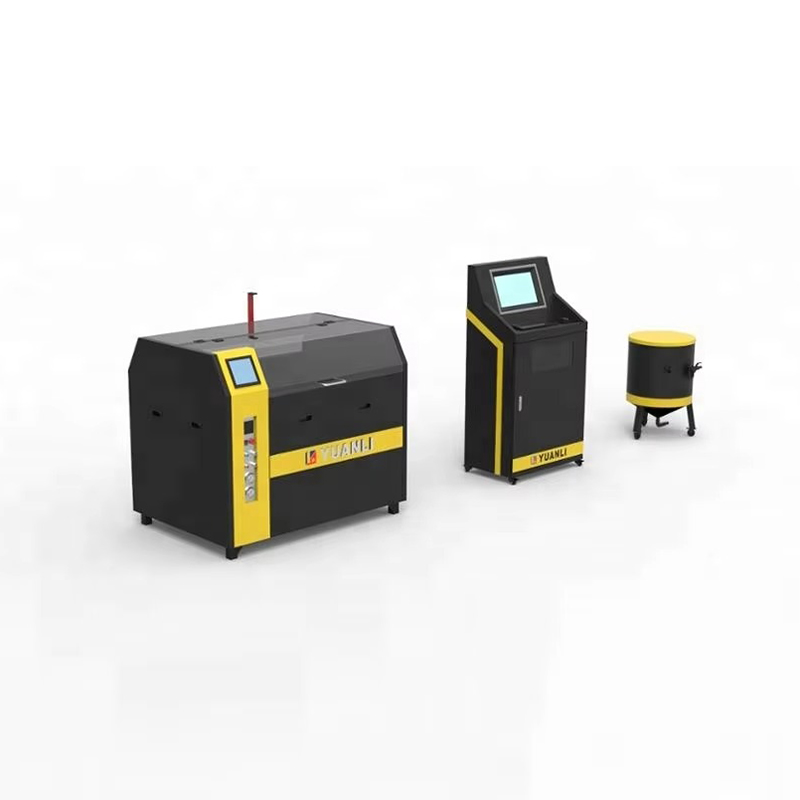
Selecting the appropriate power tier requires aligning the machine capabilities with your daily production demands. Over-specifying leads to wasted capital. Conversely, under-specifying creates frustrating production bottlenecks.
Pressure Tier | Approximate PSI / MPa | Ideal Applications | Maintenance Profile |
|---|---|---|---|
Low to Medium | 10,000 - 30,000 PSI | Foam, rubber, food processing, soft plastics | Extremely low wear, long component life |
Industry Standard | 46,000 PSI | Carbon steel, aluminum, stone, glass, general fabrication | Balanced wear, highly predictable rebuild cycles |
Ultra-High (UHP) | 60,000 - 90,000+ PSI | Aerospace titanium, thick armor plating, high-volume production | High friction, frequent and costly seal replacements |
This lower tier is rarely utilized for abrasive metal cutting. Instead, it dominates the realm of pure water applications. At these levels, the machine operates without abrasive garnet, relying solely on a hair-thin water stream to slice through soft, compressible materials.
Industries leveraging this range include food processing for portioning meats without cross-contamination, packaging for carving custom foam inserts, and automotive manufacturing for trimming rubber weather stripping. Furthermore, operating at these relaxed levels dramatically extends the operational life of internal seals and fittings.
For the vast majority of job shops and manufacturing facilities, a reliable 320mpa pump represents the ultimate sweet spot. It is neither underpowered nor needlessly aggressive. Translating to approximately 46,000 PSI, this configuration provides ample kinetic energy to drive abrasive particles through thick carbon steel, aluminum, glass, and stone.
Let us look at real-world engineering specs. A robust 320MPa system, such as those equipped with a standard 37kW or 50HP motor, typically delivers a steady flow rate of around 3.7 to 3.8 liters per minute. This specific output ensures a clean kerf without excessive taper. The primary advantage here is the predictable, economical maintenance cycle. Components experience a linear wear rate, allowing maintenance teams to schedule routine rebuilds without unexpected catastrophic failures.
Engineered for high-volume production environments, the UHP tier is reserved for facilities where throughput speed is the absolute highest priority. Systems operating at 90,000 PSI can sever certain dense materials significantly faster than standard setups. Additionally, the higher velocity stream requires slightly less abrasive garnet per inch of cut.
However, this extreme performance is typically necessary only for specialized sectors. The upfront capital cost is steep, and the extreme physics involved demand rigorous, frequent maintenance schedules.
Recent market analysis shows a distinct pivot in procurement strategies across the fabrication sector. Just a few years ago, the dominant narrative pushed 90,000 PSI systems as the ultimate upgrade for any shop. Today, rising global energy costs and supply chain constraints for specialized ultra-high components have shifted the focus.
Modern shop owners increasingly prioritize machine uptime and predictable maintenance over raw cutting speed alone. Consequently, there is a massive surge in demand for optimized 320MPa setups equipped with smart variable frequency drives. These intelligent systems dynamically adjust the motor RPM based on the exact cutting load, perfectly blending electrical efficiency with mechanical precision. The industry is realizing that smarter pressure is far more profitable than maximum pressure.
Different molecular structures respond uniquely to kinetic erosion. Consequently, the material you intend to process should be the primary factor dictating your equipment specifications.
Metals absolutely require the introduction of abrasive garnet. To slice through metals efficiently without creating a thermal distortion, known as the Heat-Affected Zone, robust force is mandatory. For standard fabrication processing up to 2-inch steel, standard 46,000 PSI is highly effective. In contrast, if your facility processes 4-inch Inconel or tool steel daily, upgrading to a 60,000 PSI system may be justified to maintain profitable cycle times.
Brittle materials present a distinct shop-floor challenge. Glass, stone, and ceramics are highly susceptible to cracking, chipping, or shattering during the initial piercing phase. Imagine trying to pierce a thick sheet of ballistic glass. If the water hits the surface at full force, the localized stress will cause catastrophic failure.
Therefore, machines processing these materials require adjustable digital controls. The operator must program a low-pressure pierce, dropping down to roughly 10,000 PSI, to gently drill a pilot hole. Once the stream breaks through the bottom, the software automatically ramps up to full cutting power to execute the toolpath.
When processing soft materials, abrasive is not only unnecessary but detrimental. Stray grit can easily embed itself into the final product. For foam and soft plastics, lower force is strongly recommended. If the velocity is too high, delicate foams will compress unevenly or blow out at the edges, resulting in a distorted profile.
Once you have identified your required power range, the next major decision involves mechanical architecture. The industry relies on two primary technologies, each boasting distinct engineering philosophies.
Operating on Pascal’s Law of hydraulic amplification, an intensifier pump uses a standard electric motor to drive a hydraulic system. This pressurized hydraulic oil, usually around 3,000 PSI, pushes a large piston back and forth. Attached to this large piston are much smaller ceramic plungers that push against the water.
Because the surface area of the hydraulic piston is roughly 20 times larger than the water plunger, the force is intensified by a 20:1 ratio. This effortlessly converts 3,000 PSI of oil pressure into 60,000 PSI of water pressure. This robust design excels at maintaining stable output for long durations and easily supports running multiple cutting heads simultaneously.
Conversely, a direct-drive model, often called a positive displacement pump, operates much like an automobile engine. An electric motor turns a mechanical crankshaft, which directly drives three or more plungers into cylinders to pressurize the water. There is no hydraulic oil involved in this process.
The standout benefit here is exceptional energy efficiency. Direct-drive systems transfer up to 90 percent of electrical energy directly to the water stream, compared to the 65 percent efficiency of hydraulic intensifiers. They also feature a smaller footprint.
Choose Hydraulic Intensification if: You run a high-production facility operating multiple shifts, cut thick dense metals daily, or utilize multiple cutting heads on a single gantry bridge.
Choose Direct Drive if: You manage a smaller job shop, prioritize electrical energy savings, run a single-head machine, and have limited floor space.
Equipment brochures frequently highlight the dazzling benefits of ultra-high output. However, objective buyers must evaluate the Total Cost of Ownership. In the realm of high-pressure physics, efficiency and mechanical wear-and-tear are locked in a zero-sum game.
Maintaining any high pressure pump requires budgeting for consumables, but UHP systems accelerate this curve. At standard operating levels, U-cup seals, check valves, and high-pressure cylinders exhibit excellent longevity. A well-maintained machine can run for hundreds of hours between rebuilds. When you escalate to 90,000 PSI, the lifespan of these exact same components drops drastically due to extreme friction and metal fatigue. A dynamic seal that lasts 600 hours normally might fail after just 200 hours under extreme conditions.
Running extreme output requires specialized infrastructure. Standard stainless steel tubing is simply not rated for 90,000 PSI. Upgrading requires sourcing thicker, autofrettaged tubing, collars, and glands. These components are manufactured to exacting metallurgical standards to prevent catastrophic blowouts, making them significantly more expensive.
Even with perfectly specified equipment, operators will inevitably face anomalies on the shop floor. Rapid diagnosis is essential to prevent material scrap.
A sudden loss of force at the cutting head is a common headache. If the digital gauge shows a drop, the root cause is almost always mechanical starvation or a leak. Common culprits include clogged 1-micron inlet water filters causing pump cavitation, failing check valves that allow water to bleed backward, or worn seals letting water bypass the cylinder during the compression stroke.
If the force is fluctuating rapidly, operators will notice distinct, irregular striations on the bottom half of the cut edge. Consistent, flat-line output is mandatory for a smooth finish. If edge quality degrades but the gauge remains stable, the issue has likely shifted to a worn jewel orifice, a degraded tungsten carbide mixing tube, or wet abrasive clumping in the delivery line.
Before reaching out to a manufacturer for a formal quote, compile specific data regarding your facility production needs. A reputable manufacturer will use this data to recommend the exact configuration required.
Material Matrix: What are the top three materials you will process daily?
Maximum Thickness: What is the absolute thickest material you intend to cut on a regular basis—do not specify based on a rare outlier job.
Production Volume: Will this machine run for 4 hours a day, or 24 hours a day in a continuous production loop?
Utility Constraints: What is the maximum electrical amperage available at your facility?
Water Quality: Have you tested your incoming tap water? High Total Dissolved Solids will destroy seals rapidly, regardless of your settings.
Strategic Goal: Are you optimizing primarily for maximum throughput speed, or for the lowest possible hourly maintenance cost?
Choosing the right configuration requires careful, objective analysis of your shop floor realities. Every material demands a specific approach, and there is no single best setting—only the best setting for your unique application. For the vast majority of versatile fabrication shops, relying on a balanced 320MPa system offers the perfect synergy of cutting speed and manageable maintenance.
Assess your daily production needs, evaluate your local utility constraints, and consult with industry experts to configure your ideal setup. Explore the proven capabilities of Yuanli Waterjet products to ensure your investment maximizes long-term profitability while keeping unexpected downtime to an absolute minimum.
Commercial cutting machines typically reach maximum capabilities of around 90,000 to 100,000 PSI, or 620 to 690 MPa. However, the vast majority of industrial fabrication shops operate their equipment between 40,000 and 60,000 PSI, as this range offers the most cost-effective balance between cutting speed and component longevity.
Yes. A 320MPa system, translating to approximately 46,000 PSI, can cleanly and efficiently cut through thick steel, aluminum, and titanium when properly combined with the correct abrasive flow rate and orifice size. While it may cut slightly slower than a 60,000 PSI system, it significantly reduces the wear and tear on internal components.
Maintenance costs vary heavily based on the mechanical architecture, incoming water quality, and operating levels. Higher output requires much more frequent replacement of seals, check valves, and orifices. Budgeting for routine consumable replacements is a necessary and expected part of operating any abrasive cutting system.
Not necessarily. While higher velocity allows for faster cutting speeds, edge quality is primarily determined by the cutting speed itself, the amount of abrasive used, and the stability of the stream. A well-maintained 46,000 PSI system moving at the correct speed will produce a smoother edge than a 90,000 PSI system suffering from pressure spikes or a worn mixing tube.
Water consumption depends entirely on the pump horsepower and the size of the jewel orifice. A standard 37kW system operating at 320MPa typically consumes between 0.8 to 1.0 gallons per minute, which equates to roughly 480 to 600 gallons per hour of continuous cutting. Facilities often implement closed-loop recycling systems to drastically reduce this water footprint.
Yes. Modern control software allows operators to easily toggle between different settings. This is particularly important when processing brittle materials like glass or stone. Operators can program the machine to pierce the material at a low setting to prevent cracking, and then automatically ramp up to full power for the actual cutting path.


