
Views: 0 Author: Site Editor Publish Time: 2026-10-30 Origin: Site


Tight deadlines and material waste continuously threaten construction profit margins. Contractors often rely on poorly executed thermal cuts that warp and damage critical components. Consequently, the resulting project rework becomes exorbitantly expensive and delays entire schedules. Fortunately, advanced cold-cutting technology solves these structural issues with unmatched precision. This equipment completely transforms how fabrication shops handle everything from heavy steel beams to delicate architectural finishes.
In this comprehensive guide, you will discover exactly how upgrading your fabrication processes can safeguard your project timelines and boost your overall operational efficiency.
Waterjet technology completely eliminates the Heat-Affected Zone, preserving the critical structural integrity of load-bearing materials.
These systems offer substantial versatility. They empower shops to profile everything from thick structural steel to fragile glass and decorative stone using a single machine.
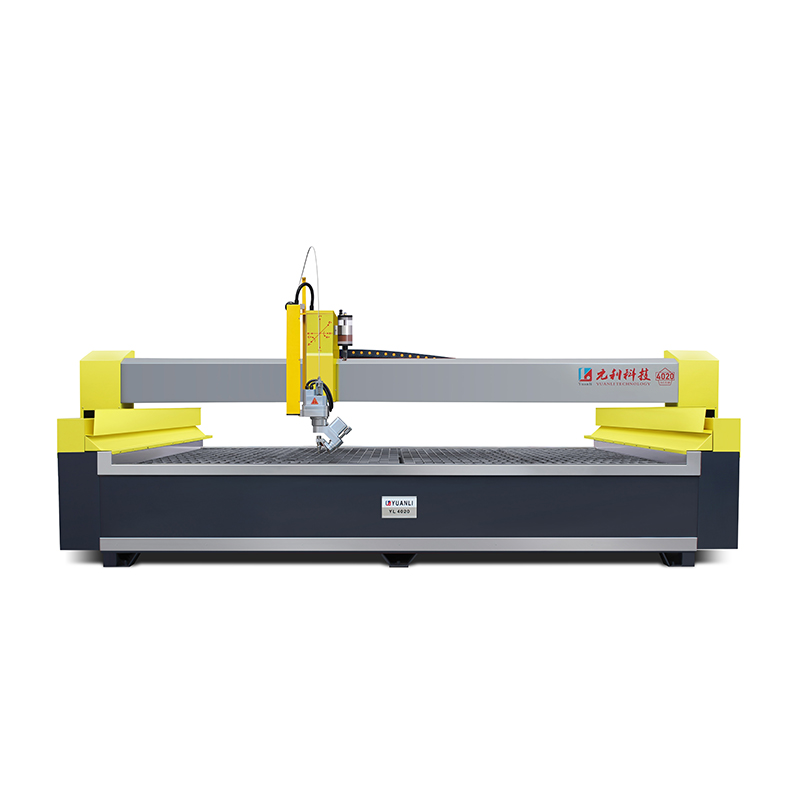
A gantry-style machine provides the immense stability required for large-scale fabrication. This architecture allows heavy material sheets to be loaded and processed efficiently without mechanical deflection.
Deploying this advanced cutting method significantly reduces material scrap. Moreover, it lowers secondary machining costs and streamlines overall project assembly on the job site.
The construction sector continually seeks fabrication methods that perfectly balance speed, pinpoint precision, and material integrity. Recent market analyses indicate a sharp pivot in the industry toward sustainable, high-precision manufacturing. Modular construction and pre-engineered steel structures now demand zero-tolerance assembly on the job site. Furthermore, as modern building codes enforce stricter structural tolerances and environmental agencies crack down on hazardous job site emissions, traditional thermal cutting is rapidly losing ground. Contractors are heavily investing in cold-cutting technologies to stay compliant, reduce their carbon footprint, and maintain a competitive edge in a highly demanding market.
At its core, an industrial waterjet operates on a straightforward physical principle of accelerated erosion. The system utilizes a specialized intensifier pump, often powered by a robust 42KW or 50HP motor, to pressurize water to extreme levels. These heavy-duty systems typically maintain a continuous operating pressure of 60,000 pounds per square inch. This highly pressurized water is then forced through a microscopic orifice crafted from sapphire or diamond. This engineering creates a cohesive stream that moves at supersonic speeds.
For soft materials like fiberglass insulation, this pure water stream is entirely sufficient. However, when processing rigid building materials like carbon steel or reinforced concrete, an abrasive substance like crushed garnet is introduced into the stream inside a mixing chamber. The resulting abrasive jet acts as a highly focused liquid sandpaper. It cleanly erodes the material at a microscopic level without applying any mechanical stress to the surrounding area.
Historically, heavy fabrication relied heavily on band saws, abrasive blades, oxy-fuel torches, and plasma cutters. While functional for rough work, these traditional methods present distinct and costly limitations. Mechanical blades suffer from rapid wear when slicing through abrasive materials like concrete. This leads to inconsistent edges and soaring consumable costs. In contrast, thermal methods introduce extreme heat into the metal. This intense thermal shock causes distortion, warping, and metallurgical changes that can severely compromise the load-bearing capacity of steel frameworks. Cold-cutting technology addresses these fundamental flaws by preserving the original engineered state of the material.
Implementing a high-pressure water system introduces measurable operational improvements across multiple phases of the building process. Below are objective ways this technology directly enhances fabrication efficiency and protects profit margins.
The most significant engineering advantage of this equipment is its cold-cutting nature. Thermal methods inevitably create a Heat-Affected Zone, an area where the metal molecular structure is permanently altered by high temperatures. In structural steel, this heat causes localized hardening. The edges become brittle and highly prone to micro-fracturing under heavy loads. By utilizing a metal waterjet, fabricators completely eliminate this thermal damage. The structural integrity of load-bearing beams, base plates, and structural gussets remains pristine. This ensures strict compliance with building codes and eliminates the costly rejection of warped components.
Building materials represent a massive portion of a project budget. These machines operate with a remarkably narrow kerf, typically hovering around 0.030 to 0.040 inches. When paired with advanced CAD nesting software, operators can arrange digital parts mere millimeters apart on a single sheet. This incredibly tight nesting maximizes material yield. Consequently, it reduces scrap rates by an estimated 15 to 30 percent compared to traditional wider-kerf cutting methods.
Standard plasma or oxy-fuel cuts frequently leave behind thick dross, slag, and rough hardened edges. Construction workers must then spend grueling hours manually grinding or milling these edges in a noisy shop before the components can be welded together. Furthermore, a water stream leaves a smooth, satin-like finish that requires zero manual intervention. This superior edge quality means parts can be moved directly from the cutting table to the final assembly line.
A standard fabrication facility might require a plasma cutter for steel plates, a heavy-duty bridge saw for stone slabs, and specialized routers for composite panels. Amazingly, a single high-pressure water system can replace all these tools. By simply adjusting the pump pressure, traverse speed, and abrasive flow rate at the control panel, the exact same machine can transition from slicing 4-inch thick steel plates to profiling delicate architectural glass in a matter of minutes.
Traditional cutting processes generate highly hazardous byproducts. Plasma cutting releases noxious fumes and metallic smoke, mandating the installation of expensive extraction systems. Similarly, cutting concrete or stone with dry saws produces respirable crystalline silica dust. This is a severe health hazard strictly regulated by safety authorities. Because the abrasive water process entirely encapsulates the cutting action within a liquid stream, it generates zero airborne dust, no toxic fumes, and no hazardous smoke.
The true utility of this equipment in the building sector is largely defined by its broad material compatibility. Understanding exactly what can be processed helps contractors plan their workflows much more effectively.
Metals are the undeniable backbone of commercial infrastructure. High-pressure abrasive cutting is exceptionally effective for processing carbon steel, stainless steel, aluminum, and copper. It is routinely deployed to fabricate custom HVAC ductwork, structural I-beam coping, and heavy-duty base plates. Unlike lasers, which frequently struggle with highly reflective metals due to beam bounce-back, water streams easily cut reflective alloys without any drop in efficiency or risk of damaging expensive optics.
In architectural and high-end interior construction, precision stone profiling is highly valued. These machines are utilized to cut incredibly intricate patterns in granite, marble, and engineered quartz for custom lobby flooring. Specifically, abrasive jets can effortlessly slice through thick reinforced concrete. Because the stream easily erodes both the concrete matrix and the embedded steel rebar simultaneously, it entirely prevents the micro-fracturing that impact tools usually cause.
Modern glass facades and custom window enclosures demand precise and stress-free processing. Traditional glass cutting involves scoring and snapping. This rigid method severely limits design complexity. Utilizing specialized low-pressure piercing techniques, a water stream can cut complex curves and internal holes in fragile glass without shattering it, though tempered glass cannot be altered after heat treatment. In addition, pure water streams are frequently used to rapidly slice through thick fiberglass insulation panels.
When integrating new fabrication equipment into a bustling workflow, selecting the correct machine architecture is just as critical as the cutting technology itself. Manufacturers typically offer two primary machine configurations. Understanding the structural differences between these two designs is essential for making an informed purchasing decision.
A gantry waterjet features a robust, bridge-like structure that spans the entire width of the cutting table. The cutting head travels along this bridge across the Y-axis, while the bridge itself moves back and forth across the length of the table along the X-axis. Driven by high-precision ball screws and linear guides on both sides, this dual-sided support system provides exceptional mechanical stability. This is a non-negotiable requirement when processing the massive and heavy sheets of material typical in the building sector.
For heavy-duty applications, the gantry design is widely considered the industry gold standard. The inherent rigidity of the bridge prevents microscopic deflections and vibrations that can occur when the cutting head changes direction at high speeds. This stability ensures that extreme precision is maintained across the entire cutting envelope. Furthermore, gantry systems can easily accommodate multiple cutting heads simultaneously, instantly doubling throughput on large-scale architectural projects.
In contrast to the fully supported bridge of a gantry system, a cantilever machine features a single arm that extends over the cutting table, supported only on one side. The primary advantage of a cantilever design is accessibility. Because it is open on three sides, forklift operators can easily load and unload awkwardly shaped materials from multiple angles.
However, for industrial applications, the cantilever design has distinct limitations. The unsupported end of the arm is susceptible to micro-vibrations, especially as the cutting head moves further away from the base axis. When dealing with thick structural metals or dense concrete, these vibrations can slightly degrade the edge quality. Therefore, a gantry system remains the far superior choice for high-volume and heavy-material environments.
Feature | Gantry Design | Cantilever Design |
|---|---|---|
Structural Support | Dual-sided bridge | Single-sided arm |
Vibration Control | Excellent rigidity | Moderate stability |
Material Loading | Front and rear access | Open on three sides |
Multi-Head Capability | Highly suitable | Rarely supported |
Best Construction Use | Heavy steel, large stone slabs, high-volume | Light architectural metals, small custom parts |
Contractors often weigh the benefits of water-based technology against established thermal methods like plasma and laser. Evaluating them based on edge quality, material limitations, and thermal impact reveals exactly why cold-cutting is increasingly favored for critical structural components.
Plasma cutting utilizes an electrically conductive gas to transfer massive amounts of energy from a power supply to the material. Plasma is undeniably faster when slicing through thick and rough steel where edge quality is not a primary concern. However, plasma introduces severe thermal damage. The intense heat alters the metallurgical structure of the steel edge, hardening it and making secondary machining such as tapping or drilling incredibly difficult. The cold-cutting alternative leaves zero thermal distortion, preserving the beam integrity and eliminating the labor-intensive need to grind away hardened slag before welding.
Laser cutting employs a focused beam of light to melt or vaporize material. It is highly precise and exceptionally fast on thin sheet metals under a quarter-inch thick. Yet, lasers struggle significantly with highly reflective materials such as copper and brass. The beam can literally reflect back and destroy the cutting lens. Furthermore, laser efficiency drops dramatically as material thickness increases beyond one inch. An abrasive stream does not rely on optics or heat. It profiles reflective metals effortlessly and easily slices through solid materials several inches thick.
Cutting Technology | Heat-Affected Zone | Max Thickness for Steel | Reflective Metals | Non-Metal Cutting |
|---|---|---|---|---|
Waterjet | None | 8+ inches | Excellent | Yes |
Plasma | High | 2-3 inches | Good | No |
Laser | Low to Moderate | Up to 1 inch | Poor to Moderate | Limited |
To truly understand the return on investment, it is helpful to examine how construction cutting technology is deployed on actual job sites and in busy pre-fabrication facilities. The ability to transition seamlessly from one material to another without physically changing tooling allows contractors to consolidate their workflows dramatically.
The backbone of modern commercial buildings relies on precisely engineered steel. Fabricators routinely deploy these machines to profile custom gussets, heavy-duty base plates, and complex structural brackets. Because the cold process prevents thermal distortion, engineers can trust that the bolt holes and interlocking joints will align perfectly once they reach the job site. This precision drastically reduces the costly downtime associated with on-site rework.
Modern architecture frequently blends disparate materials, requiring contractors to process metal, stone, and glass for a single unified project. These systems excel in creating intricate metal facades and custom-cut marble flooring for high-end hotel lobbies. The narrow kerf allows for incredibly tight nesting of decorative patterns, ensuring minimal waste of highly expensive materials like imported granite or architectural titanium.
MEP contractors utilize precise cutting to streamline the installation of complex building systems. Daily applications include cutting custom pipe fittings, manufacturing heavy-gauge HVAC ducting transitions, and creating precise cutouts in thick electrical control panels. The smooth and burr-free edges produced by the abrasive stream mean that pipes and ducts can be fitted and sealed immediately.
Investing in major capital equipment requires a rigorous evaluation of both the machine technical specifications and the manufacturer reliability. For professionals looking to bring fabrication in-house, several key criteria dictate the long-term viability of the machine.
The intensifier pump is the absolute heart of the system. For heavy building materials, a robust 42KW or 50HP pump capable of sustained 60,000 PSI high pressure is essential. Higher pressure directly translates to a faster cutting stream and reduced abrasive consumption, which maintains profitable production speeds.
Building materials are rarely small or light. Ensure the machine cutting envelope can easily accommodate standard industrial sheet sizes ranging from 5x10 feet to 6x12 feet. Additionally, the tank and slat support system must be engineered to hold the immense concentrated weight of thick steel plates without bowing over time.
The hardware is only as effective as the software driving it. Look for intuitive control systems that offer automated nesting features. High-quality software will automatically arrange parts on a digital sheet to maximize material yield. This is absolutely critical when processing expensive alloys, saving thousands of dollars in scrap over a single fiscal quarter.
Unexpected downtime directly impacts project deadlines. It is vital to partner with a manufacturer that provides comprehensive after-sales support and readily available replacement parts. Selecting a proven system ensures that your facility is fully equipped to handle the rigorous daily demands of modern structural fabrication.
Ultimately, upgrading to modern fabrication technology saves contractors significant time and money by dramatically reducing waste and consistently producing superior parts. By completely eliminating heat distortion and secondary finishing, this advanced equipment fiercely protects your overall profit margins. As building designs become more complex and project deadlines grow tighter, integrating a versatile heavy-duty machine into your workflow is a necessity. If you are ready to elevate your fabrication capabilities, explore the high-performance solutions at Yuanli Waterjet. Contact our expert engineering team today to find the perfect machine for your specific operational needs and begin transforming your daily construction workflow.
The thickness capacity depends on the pump pressure and the volume of abrasive used. Most industrial-grade systems can comfortably cut through 6 to 8 inches of solid steel or titanium. For softer metals like aluminum, the thickness capacity can easily exceed 10 inches. This makes the technology exceptionally well-suited for heavy structural components and thick base plates that lasers and plasma simply cannot penetrate accurately.
Operating this equipment does involve consumable costs, primarily the garnet abrasive, water, electricity, and periodic replacement of high-pressure seals. However, these operating expenses must be weighed against the massive savings generated elsewhere in the shop. By eliminating the thermal damage zone, you completely remove the labor costs associated with secondary grinding. Furthermore, the tight nesting capabilities drastically reduce material waste, typically resulting in a very rapid return on investment.
Yes, an abrasive water stream is highly effective at cutting through reinforced concrete. Unlike traditional diamond saws that can dangerously bind or kick back when hitting steel rebar, the abrasive stream cuts through the concrete matrix and the embedded steel simultaneously. Crucially, because it is a non-impact process, it does not create microscopic stress fractures in the surrounding concrete.
A gantry configuration provides a rigid, bridge-like structure supported and driven on both sides of the cutting table. Construction materials require a massive cutting envelope and generate significant weight. The dual-sided support of a gantry prevents the mechanical deflection and vibration that often occur in open-sided cantilever machines. This ensures absolute precision across massive sheets of material.
High-quality machines equipped with precision linear guides and ball screws can achieve cutting tolerances as tight as plus or minus 0.003 inches. For structural steel used in construction, this level of accuracy guarantees that bolt holes, coped joints, and complex interlocking profiles align perfectly on the job site. This eliminates the need for manual adjustments and accelerates the erection of steel frameworks.
This cold-cutting method is exceptionally environmentally friendly compared to thermal alternatives. It utilizes a closed-loop or easily filtered water system alongside natural garnet abrasive. It produces zero hazardous fumes, no metallic smoke, and no airborne silica dust. This vastly improves respiratory safety for operators and simplifies compliance with strict environmental and occupational health regulations.


