
Views: 0 Author: Site Editor Publish Time: 2026-09-05 Origin: Site


Evaluating equipment for your shop floor demands clarity. Shop managers, engineers, and procurement officers often face difficult choices when upgrading fabrication capabilities. Understanding the exact physics of cold-cutting serves as the first step to accurately calculating ROI, maintenance schedules, and unit economics.
Traditional cutting methods like laser, plasma, or EDM frequently introduce heat-affected zones (HAZ). They cause warping, alter metallurgical properties, and present strict material limitations. You lose valuable time and money correcting these thermal distortions through secondary machining.
Modern solutions solve this thermal problem completely. They utilize hyper-pressurized water forced through a microscopic orifice. Often mixed with abrasives, this stream erodes material at supersonic speeds. Let us explore exactly how a Waterjet Cutting Machine transforms simple water into a precision manufacturing tool.
A waterjet cutting machine utilizes pressure between 40,000 and 90,000 PSI to accelerate water to Mach 3+, effectively eroding rather than burning material.
Systems are categorized into Pure Waterjet (for soft materials) and Abrasive Waterjet (for metals, stone, and composites).
The absence of a Heat-Affected Zone (HAZ) eliminates secondary finishing requirements, lowering total cost per part.
Evaluating a machine requires looking beyond top speed; buyers must weigh pump technology (Intensifier vs. Direct Drive), consumable costs (garnet, seals), and CNC software compatibility.
Understanding cold-cutting requires a shift in how we view material removal. Most traditional tools rely on thermal melting or mechanical shearing. Waterjets take a completely different approach.
A waterjet cuts through rapid, localized micro-erosion. It does not burn or melt the workpiece. Instead, the concentrated stream strikes the material surface and physically washes microscopic particles away. This process happens exceptionally fast. You can think of it as accelerated natural erosion. What takes a river centuries to carve out, a high-pressure stream accomplishes in seconds. This fundamental difference makes the technology incredibly versatile across diverse materials.
The system relies on basic fluid dynamics. It converts immense potential energy into kinetic energy. High-pressure water travels from the pump to the cutting head. As it exits a tiny jewel orifice, the water experiences a massive pressure drop. This forces the liquid to accelerate instantly. The stream reaches supersonic velocities, frequently exceeding Mach 3. This extreme kinetic energy gives the stream its cutting power. Velocity, rather than raw pressure, does the actual cutting work.
The business value of cold cutting cannot be overstated. Traditional lasers and plasmas create a Heat-Affected Zone (HAZ) along the cut edge. This heat hardens the material, creates micro-cracks, and causes warping. Eliminating thermal distortion maintains complete metallurgical integrity. Parts remain flat and dimensionally stable. You rarely need secondary machining to clean up hardened edges. This drastically lowers scrap rates and reduces overall labor hours per part.
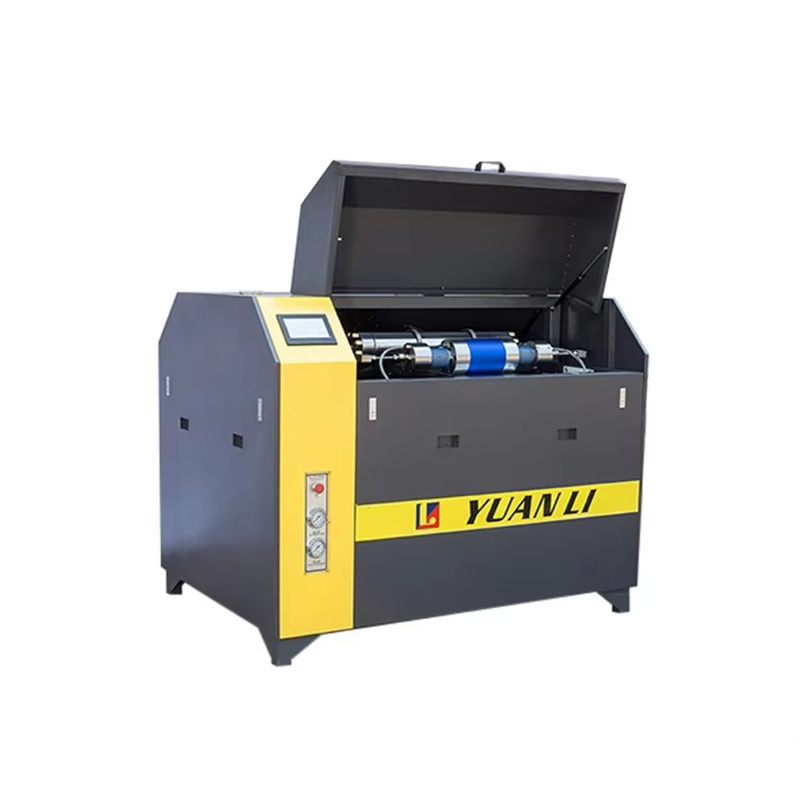
Every system operates through a network of precisely engineered components. When evaluating a Waterjet Cutting Machine for your facility, you must analyze four critical areas.
The pump generates the massive pressure required for operations. Manufacturers generally offer two distinct technologies.
Intensifier pumps utilize hydraulic pressure to drive a large piston. This piston pushes a smaller plunger, multiplying the water pressure. They operate at a slower stroke rate. This slower rate makes maintenance on high-pressure seals much easier. Intensifiers are ideal for continuous, high-volume production.
Direct drive pumps operate differently. They use a crankshaft to drive three plungers directly. These pumps offer better energy efficiency. They also feature a much smaller physical footprint. Historically, direct drive units required more frequent maintenance. However, modern iterations feature vastly improved seal lifespans.
The cutting head houses the most delicate components. Inside, a tiny jewel orifice shapes the high-pressure stream. Manufacturers typically use diamond, ruby, or sapphire for this jewel. Diamonds last the longest, often surviving over 1,000 hours of use. Rubies and sapphires wear out faster but cost less upfront.
When evaluating cutting heads, focus closely on wear rates and alignment stability. Perfect alignment between the jewel and the mixing tube is critical. Misalignment causes the stream to hit the inner walls. This drastically increases consumable costs and ruins cut quality.
For cutting hard materials, the machine must introduce an abrasive into the stream. This requires a precise delivery system.
A hopper stores the dry abrasive material (typically crushed garnet).
A metering dial controls the exact flow rate of the abrasive.
The high-speed water stream passes through the cutting head.
This creates a vacuum via the Venturi effect.
The vacuum pulls the metered abrasive down into the mixing chamber.
Inconsistent abrasive flow presents a major implementation risk. Any moisture or clumping in the delivery line interrupts the flow. This instantly leads to edge striations, incomplete cuts, and part rejection.
Precision relies entirely on the mechanical gantry system. You need highly rigid gantries to maintain strict tolerances. Aerospace and medical applications often require tolerances between ±0.001 and ±0.003 inches. The CNC software must coordinate fluid motion to prevent corner gouging.
Beneath the cutting table sits the catcher tank. This large body of water dissipates the immense kinetic energy of the stream safely. It also captures the spent abrasive and eroded material. Many shops implement extraction systems here for potential abrasive recycling.
Operators classify these machines based on the cutting stream composition. Choosing the right category depends strictly on your material mix.
A pure system uses only the sheer kinetic force of water. The stream width remains incredibly narrow, sometimes as small as 0.004 inches. This creates a hair-thin cut.
Industries use pure setups for soft, pliable materials. Common use cases include food processing, foam packaging, rubber gaskets, and plastics. The business advantages are significant. You face zero risk of abrasive contamination. The minimal kerf width allows for incredibly tight nesting of parts. Furthermore, operating costs remain extremely low since you do not purchase garnet.
An abrasive system introduces a hard particulate into the stream. Crushed garnet is the industry standard. The water accelerates the garnet, effectively turning the stream into high-speed liquid sandpaper.
You need this setup for rigid, dense materials. Common applications include titanium, tool steel, aluminum, thick glass, ceramics, and carbon fiber composites. The main business advantage is unmatched versatility. A well-configured machine can cut materials over 10 inches thick. It easily handles reflective metals where lasers fail or thick plates where plasmas melt.
Feature | Pure Configuration | Abrasive Configuration |
|---|---|---|
Stream Width (Kerf) | 0.004 to 0.010 inches | 0.030 to 0.040 inches |
Primary Materials | Foam, Rubber, Plastics, Food | Steel, Titanium, Glass, Stone |
Consumable Costs | Low (Water and Electricity) | Higher (Garnet heavily factored) |
Maximum Thickness | Up to 2-3 inches (soft material) | Up to 10-12 inches (hard material) |
Running a fabrication department requires predictable operating expenses. Let us explore the daily realities of running these systems.
Garnet consumption represents your largest ongoing expense. Abrasive feed rates scale dramatically with material thickness. A half-inch steel plate might require one pound of garnet per minute. A three-inch plate might require two pounds per minute.
Your desired edge quality also dictates abrasive usage. Industry standards measure edge quality on a Q1 to Q5 scale. A Q1 finish represents a fast, rough cut with heavy striations. A Q5 finish represents a very slow, smooth, near-machined edge. Achieving a Q5 finish requires the machine to move slower, consuming significantly more abrasive per inch of cut.
We must set transparent expectations regarding system upkeep. Consumables have highly predictable lifespans.
Mixing Tubes: Generally last 50 to 100 hours depending on abrasive quality.
Jewel Orifices: Rubies last roughly 40 hours; diamonds can exceed 1,000 hours.
High-Pressure Seals: Typically require replacement every 500 hours.
Check Valves: Need inspection during routine pump maintenance.
Ignoring preventative maintenance presents severe downtime risks. High-pressure plumbing operates under extreme stress. Failing to replace a weeping seal inevitably leads to catastrophic component failure. This halts production and ruins profit margins.
Utility requirements demand careful facility planning. High-pressure pumps require robust 3-phase electrical power. Water quality is equally critical. You must test your incoming municipal water. Hard water contains dissolved solids that destroy pump seals and clog jewel orifices. Most installations mandate water softening or reverse osmosis filtration systems to prevent premature wear.
No single technology handles every shop requirement perfectly. You must understand where the cold-cutting process truly excels and where it falls short.
You should deploy this technology when edge integrity is non-negotiable. It excels at processing thick materials that overwhelm other machines. It easily cuts highly reflective metals like copper and brass, which often blind fiber lasers. It also processes heat-sensitive alloys and composite materials like carbon fiber perfectly. Because there is no HAZ, delicate composites do not delaminate during cutting.
You should utilize alternative methods for high-volume, thin-gauge sheet metal. A modern fiber laser cuts thin steel vastly faster and cheaper. Lasers dominate the HVAC and lightweight enclosure markets. Similarly, if you fabricate thick structural steel where rough cuts are perfectly acceptable, plasma is more cost-effective. Plasma offers faster cutting speeds on thick steel when edge precision does not matter.
A Waterjet Cutting Machine operates on a remarkably elegant principle. It uses velocity-driven erosion powered by complex, high-pressure engineering to slice through almost anything. It eliminates thermal distortion and delivers finished edges straight off the table.
When selecting a system, buyers should carefully audit their typical material mix. Review your most common material thicknesses and tolerance demands. Use this data to specify the correct pump size and abrasive delivery system for your floor. Do not overbuy pressure if you only process thin plastics.
As a practical next step, reach out to manufacturers for sample processing. Request test cuts on your specific, difficult materials. This allows you to verify the Q-scale edge quality firsthand. You will also get highly accurate cycle-time estimates before you finalize your procurement decision.
A: Practically, they can cut materials up to 10-12 inches thick depending on the exact density. However, optimal production speeds and edge qualities are typically found on materials between 0.5 and 4 inches thick.
A: The kerf width is typically 0.030 to 0.040 inches for abrasive jets. For pure waterjets, it remains under 0.010 inches. This exceptionally narrow kerf allows for incredibly tight nesting of parts, reducing material waste.
A: Yes. Facilities frequently run water through closed-loop filtration systems for reuse. Specialized extraction equipment can also clean, dry, and recycle up to 50-70% of the used garnet, significantly lowering running costs.
A: The speed of the cut dictates the smoothness of the edge. Faster cuts leave visible striations (Q1). Slower cuts leave a smooth, near-machined finish (Q5). This directly impacts your cycle time, consumable usage, and cost per part.


