
Views: 0 Author: Site Editor Publish Time: 2026-08-11 Origin: Site


Modern construction fabrication faces a precise and demanding challenge today. We must balance intricate architectural precision against the heavy demands of thick, diverse, and heat-sensitive materials. Traditional fabrication methods often struggle under these specific constraints. They induce severe thermal distortion in critical structural components. This heat damage severely compromises load-bearing integrity. It also ruins high-value aesthetic finishes before final assembly.
In this guide, we explore how cold-cutting technology solves these complex metallurgical issues permanently. We will introduce a system capable of entirely avoiding Heat-Affected Zones (HAZ) in critical structural applications. You will discover the practical realities of facility planning, abrasive management, and operational risks. Finally, we will outline clear strategies to integrate this highly versatile equipment effectively into your daily workflow. We acknowledge a pragmatic truth upfront. While incredibly versatile, integrating this equipment requires careful planning, strict maintenance protocols, and a solid understanding of financial return timelines.
Material Agnosticism: CNC waterjets safely cut structural steel, architectural glass, stone, and composites without thermal distortion.
Structural Integrity: Eliminating HAZ means no micro-cracking, warping, or metallurgical changes in load-bearing construction materials.
Total Cost of Ownership (TCO): Initial capital expenditure is offset by the reduction in secondary machining and finishing processes.
Facility Readiness: Successful implementation requires factoring in water treatment, garnet abrasive disposal, and high-pressure pump maintenance.
Fabricators face constant friction on the shop floor when dealing with mixed materials. Traditional methods force a difficult tradeoff on almost every project. You usually have to choose between cutting speed, edge quality, and thermal damage. Plasma systems operate very quickly. However, they leave heavy dross and create extensive thermal damage along the edge. Lasers offer excellent speed and precision. Yet, they struggle heavily on thick materials or reflective metals. Mechanical saws cut straight lines effectively. They lack the versatility needed for complex architectural geometries.
These constant compromises waste valuable production time. A successful implementation completely transforms your standard workflow. It reduces secondary finishing time to near zero. It eliminates material warping entirely. It empowers you to keep high-value architectural fabrication in-house. You no longer need to outsource intricate cutting jobs to specialized vendors. Keeping the work in-house gives you total control over project timelines and quality standards.
Driving a solid return on investment requires consolidating your shop capabilities. You can easily replace multiple specialized cutting tools. A CNC Waterjet Machine for Construction allows you to process diverse materials on one single bed. Furthermore, this method minimizes material waste significantly. It features tight nesting capabilities powered by advanced CAM software. The narrow kerf width maximizes raw material utilization. You fit more usable parts onto a single sheet of expensive material, directly improving project margins.
Modern construction relies on a diverse array of advanced materials. You need equipment capable of handling all of them reliably. Cold-cutting technology truly shines in this multi-material environment. It processes nearly any construction substrate efficiently without altering its core properties.
First, consider metals and structural components. You can process heavy carbon steel, stainless steel, aluminum, and titanium. The abrasive stream easily penetrates substrates up to 8-10 inches thick. Most importantly, the cold process preserves the temper of the metal. It maintains the original structural rating completely. You avoid the stress relief and severe warping commonly seen after heavy plasma cutting. This proves critical when fabricating load-bearing baseplates or architectural exposed steel.
Next, look at stone, tile, and masonry applications. Fabricators easily cut dense granite, marble, and engineered stone. You can produce complex architectural inlays directly from CAD files. You can execute intricate flooring designs seamlessly. You can create custom cladding without fear of damage. The system utilizes a low-pressure piercing function. This specific feature prevents brittle materials from chipping or cracking during the initial stream penetration.
Finally, we evaluate glass and modern composites. The machine processes laminated, ballistic, and standard architectural glass flawlessly. However, we must explicitly state a critical limitation here. You cannot cut tempered glass under any circumstances. It carries immense internal stress by design. Tempered glass will shatter instantly upon penetration. For all other safe glass materials, you achieve incredibly clean edge profiles. They require almost zero secondary edge polishing.
Material Category | Typical Construction Applications | Maximum Practical Thickness | Key Processing Outcome |
|---|---|---|---|
Structural Metals | Baseplates, beams, custom brackets | 8 to 10 inches | Preserves temper; zero thermal warping |
Stone & Masonry | Flooring inlays, facade cladding | 6 to 8 inches | Intricate geometries without edge chipping |
Glass | Ballistic panels, laminated windows | 3 to 4 inches | Clean frosted edge; minimal polishing needed |
Composites | FRP panels, architectural cladding | 4 to 6 inches | Prevents delamination and fiber fraying |
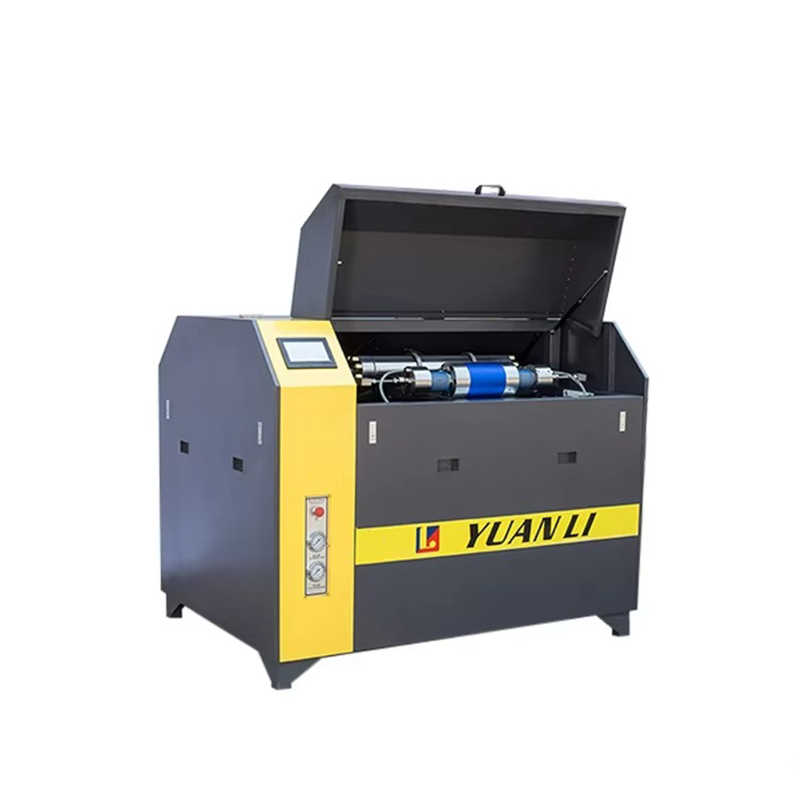
How does this equipment compare directly against traditional tools on the shop floor? We evaluate the process across three core rivalries to highlight its strategic value.
Against Plasma Systems: Plasma delivers high cutting speed on thick carbon steel. However, it creates heavy slag, dross, and severe heat damage. Cold cutting operates slower than plasma. Yet, it eliminates slag entirely. It prevents heat damage completely. This makes it ideal for cutting precision connections. When bolting critical structural members together, dimensional accuracy matters far more than raw processing speed. You bypass the grinding station entirely.
Against Laser Cutters: Lasers struggle heavily with highly reflective materials like copper and architectural brass. Their beams reflect off the surface, disrupting the cut. Lasers also face strict limitations regarding material thickness. Their focal point restricts effective cutting depth. Conversely, high-pressure water handles reflective metals effortlessly. It tackles vastly thicker substrates without losing cutting capability. You easily process 4-inch steel plates, whereas standard lasers fail.
Against Saws and Routers: Linear saws cut straight lines exceptionally well. They fail completely at internal geometries. Cold cutting is entirely omnidirectional. It moves freely in any direction based on the CNC toolpath. You can execute intricate, internal geometric cuts easily. For example, you can cut complex HVAC vent openings directly into solid structural panels. Linear saws simply cannot perform these internal maneuvers without complex plunge cuts and overcutting.
Specifying the right equipment requires deeply understanding your specific daily production needs. Do not buy a machine solely based on upfront price. You must evaluate the underlying architecture carefully to ensure long-term success.
Start with pump technology evaluation. You must choose between direct drive and linear intensifier pumps. Direct drive pumps offer a slightly lower upfront cost. They provide excellent electrical energy efficiency. Linear intensifier pumps cost more initially. However, they deliver much longer maintenance cycles. They also achieve higher pressure outputs reliably. You generally choose between 60,000 PSI and 90,000 PSI systems. Higher pressure increases your cutting speed. It also consumes less abrasive over time, lowering hourly operational costs.
Next, evaluate bed size and structural rigidity. You must match the cutting envelope to standard construction material dimensions. Standard formats like 5x10 feet handle most architectural panels effectively. For massive structural beams, you need large-format gantry systems. A rigid, heavy steel frame prevents vibration during rapid movements. Vibration degrades edge quality significantly, leading to rejected parts.
Finally, consider your motion control requirements carefully. Should you choose a 3-axis or 5-axis head? A standard 3-axis head handles flat, 2D profiles perfectly. However, heavy construction applications often demand more capability. A 5-axis head allows for precise weld-prep beveling. It executes complex architectural 3D contours smoothly. We acknowledge the steeper learning curve here. Your operators must learn advanced 5-axis CAM software. Yet, the capability to automate weld prep justifies this investment fully. Waterjet cutting with a 5-axis head replaces dangerous manual grinding completely.
Integrating this equipment introduces new operational realities into your shop. You must prepare your facility adequately before the machine arrives. Failure to plan leads to excessive downtime and unexpected utility costs.
Abrasive management requires immediate and constant attention. You will consume significant amounts of garnet abrasive daily. This represents your largest ongoing operational cost. You must also manage the spent abrasive effectively. You need specialized abrasive removal systems to extract heavy sludge from the catch tank. These automated systems require dedicated floor space. Furthermore, you must ensure local environmental disposal compliance. You cannot simply dump heavy-metal-laden sludge into standard municipal waste streams.
Water quality and treatment dictate your pump lifespan directly. Poor incoming water quality destroys high-pressure seals rapidly. We highly recommend installing closed-loop water recycling systems. These systems filter and reuse the cutting water. They minimize expensive utility costs dramatically. You also need dedicated chiller units. High-pressure pumps generate immense friction and heat. Chillers keep the incoming water cold. Cold water protects the delicate high-pressure seals inside the pump cylinders.
Maintenance downtime is completely unavoidable. You must set transparent expectations with your production team. High-pressure plumbing degrades over time. Seal replacements represent routine maintenance. Cutting head wear parts, like mixing tubes and orifices, require frequent changes based on operating hours. We strongly recommend establishing strict preventative maintenance schedules to avoid catastrophic pump failure.
Test incoming water hardness daily to protect sensitive pump components.
Stockpile critical wear parts locally to prevent extended machine downtime.
Calibrate the cutting head weekly to ensure geometric accuracy on thick structural metals.
Train multiple operators on CAM software to avoid sudden production bottlenecks.
Install an automated abrasive removal system to eliminate manual tank shoveling.
Cold-cutting technology offers tremendous strategic value for modern fabricators. It delivers high-precision, multi-material capabilities directly to the construction shop floor. It solves the hardest metallurgical challenges in the industry. It preserves structural integrity while handling delicate architectural aesthetics flawlessly.
This technology actively transitions shops away from simple, rough cutting tasks. It moves them toward highly profitable near-net-shape manufacturing. You produce finished parts ready for immediate final assembly. You bypass the grinding and secondary finishing stations entirely, saving hundreds of labor hours annually.
Before requesting sample test cuts from equipment manufacturers, take proactive action. Advise your executive decision-makers to conduct a thorough financial analysis. Base this review on your specific daily material mix. Calculate your current secondary-finishing labor costs accurately. Once you understand these underlying metrics, you can confidently integrate this technology into your construction workflow for maximum profitability.
A: Typically, it cuts up to 8-10 inches thick depending on pump pressure (PSI) and abrasive flow rate. However, cutting speeds decrease significantly at maximum thicknesses. Fabricators usually process 1-to-3-inch structural steel plates to maintain an optimal balance between speed and precision edge quality.
A: Yes, the hourly operational cost is generally higher. This stems from constant abrasive consumption and routine high-pressure pump maintenance. However, this higher hourly rate is often completely offset by eliminating secondary edge-finishing labor. You no longer pay workers to grind off plasma dross.
A: The primary hidden costs revolve around consumables and utilities. You must account for heavy garnet abrasive consumption and specialized environmental disposal fees for the resulting sludge. Additionally, you must budget for frequent wear parts like nozzles, jewel orifices, high-pressure pump seals, and continuous water filtration costs.
A: No. Tempered glass exists under extreme internal stress by design. It will shatter instantly into thousands of pieces upon initial penetration by the high-pressure stream. If you need tempered glass parts, you must cut standard annealed glass first, and then send it through the tempering process afterward.


