
Views: 0 Author: Site Editor Publish Time: 2026-08-03 Origin: Site


Marble features gorgeous natural veining and inherent brittleness. These characteristics make it a high-value but highly unforgiving material. In a commercial fabrication environment, suboptimal cutting processes directly erode profit margins. Facilities lose money through material waste, edge chipping, and severe tool burnout.
Upgrading your fabrication line requires carefully balancing daily throughput against exact precision. The primary decision typically hinges on mastering mechanical sawing parameters. Operators must understand peripheral speed and spindle limits. Alternatively, fabrication shops must adopt advanced alternative technologies. These systems capably handle incredibly complex geometries and delicate materials.
This comprehensive guide breaks down the technical parameters of marble sawing. We compare traditional mechanical shear against advanced cold erosion alternatives. You will gain an evidence-based framework for evaluating your next major equipment investment. This knowledge will help you optimize floor operations and increase profitability.
Rotation speeds (RPM) must dynamically scale with blade diameter and material hardness; static settings guarantee premature blade wear and material micro-fractures.
While bridge saws dominate high-volume straight cuts, waterjet cutting is the industry standard for intricate designs, fragile slabs, and zero-heat-affected zones.
Capitalizing on new equipment requires facility readiness, including proper foundation load-bearing, water recycling systems, and compliance with airborne particulate regulations.
Processing natural stone demands exact mechanical precision. When operators ignore technical parameters, shops bleed money. Yield loss remains the most immediate threat to fabrication profit margins. Edge blowouts occur when blade speed overwhelms the material density. These micro-fractures require expensive manual rework. In severe cases, shops must completely scrap expensive natural stone slabs. Replacing a rare Calacatta slab destroys the profit margin for an entire project.
Tooling degradation introduces massive hidden operational costs. Diamond blades require precise friction to expose new cutting diamonds. Mismatched feed rates and spindle speeds prevent this self-sharpening process. The metal bond glazes over instead of wearing evenly. Operators then force the blunt blade through the stone. This action overheats the core and strips the diamond segments prematurely. Replacing premium blades early dramatically inflates monthly consumable expenses.
Production bottlenecks further compound these financial losses. Many shops rely on the wrong cutting technology for complex jobs. Forcing a traditional circular saw to navigate intricate curve work is inefficient. The operator must make multiple relief cuts. They then spend hours grinding away the remaining material by hand. This drastically slows down floor operations. It increases manual finishing time and delays subsequent installations. Proper equipment alignment eliminates these tedious workflow roadblocks.
Mastering mechanical sawing requires understanding the math behind the cut. Operators often confuse base machine specifications with actual cutting dynamics. You must differentiate between peripheral speed and spindle RPM.
Spindle RPM measures how fast the motor turns. Peripheral speed measures how fast the diamond segment strikes the stone. Operators should calculate peripheral speed in meters per second (m/s). This calculation relies entirely on blade diameter. A 400mm blade and a 600mm blade spinning at the same RPM will impact the stone at drastically different speeds.
Marble presents a unique hardness variable. Its Mohs hardness ranges between 3 and 4. However, geological composition varies wildly. These variations dictate strict parameter adjustments.
Soft Marbles: These highly porous stones produce thicker slurry. They require higher water flow to prevent blade clogging.
Crystallized Marbles: These denser stones act almost like granite. They demand slightly lower peripheral speeds to prevent edge chipping.
Fissured Slabs: Heavily veined stones contain natural fault lines. They require drastically reduced feed rates to avoid splitting.
Feed rate synchronization prevents catastrophic material failure. You must match the machine’s forward feed rate with the rotation speed. Pushing the bridge saw too fast causes blade deflection. The blade bends slightly, creating an angled cut. This ruins the plumb edge needed for seamless seams. Slower feed rates allow the diamonds to effectively grind the kerf channel.
Modern fabrication facilities require Variable Frequency Drives (VFD). VFDs serve as a mandatory feature for precise stone processing. They allow operators to make on-the-fly RPM adjustments. You can match the exact rotational speed to specific slab densities. Older machines rely on fixed pulleys and belts. VFDs eliminate this mechanical limitation entirely.
Identify the exact blade diameter in millimeters.
Determine the optimal peripheral speed for the specific marble density.
Calculate the required spindle RPM using standard conversion formulas.
Observe the cutting resistance during the first pass.
Adjust the VFD setting to fine-tune the motor speed.
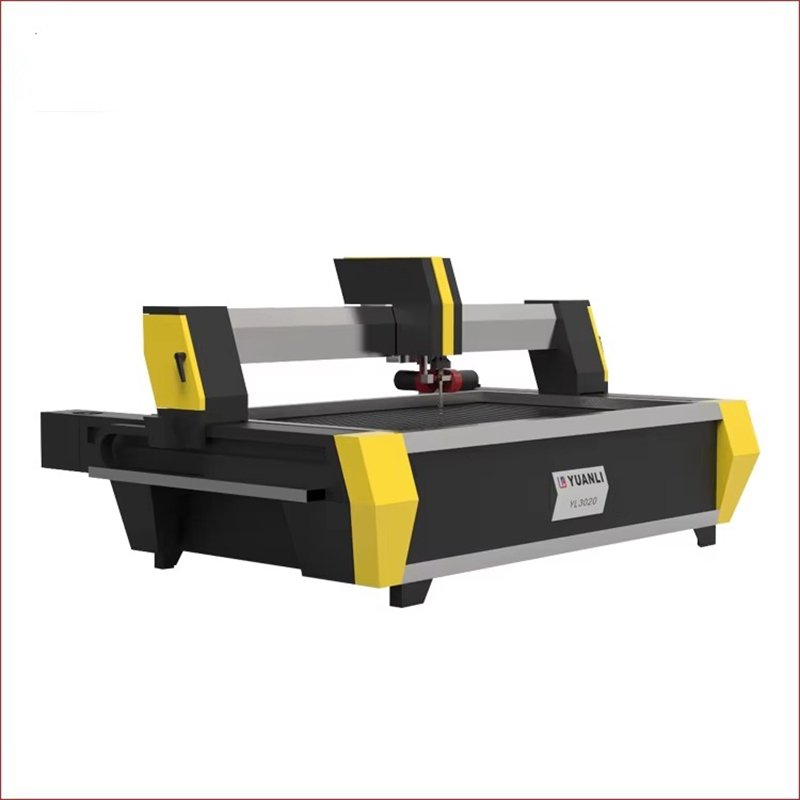
Choosing the correct equipment defines your shop's production capabilities. Different projects demand different physical cutting mechanics. You must evaluate mechanical shear against cold erosion technologies.
Bridge saws rely on mechanical shear. They remain the undisputed workhorses of the stone industry. These machines excel at high-throughput straight cuts. They perfectly handle standard countertop sizing and thick dimensional stone. However, bridge saws carry distinct physical limitations. They are strictly restricted to linear cuts. The plunge action creates significant downward pressure. This mechanical stress easily fractures highly fissured or fragile slabs.
Cold erosion offers a superior alternative for complex fabrication. Incorporating waterjet cutting transforms your design capabilities. A high-pressure stream of water and abrasive garnet smoothly erodes the stone. This method handles intricate inlays and complex sink cutouts effortlessly. It navigates sharp internal corners without overcutting.
The advantages of cold erosion are highly attractive. It produces zero thermal distortion. The nozzle applies absolutely no mechanical pressure on the slab. The narrow kerf width maximizes overall material yield. When processing rare, heavily veined stone, a premium Marble Cutting Machine utilizing high-pressure water ensures safe handling.
Forward-thinking shops often adopt hybrid solutions. CNC sawjet machines combine the best of both worlds. They feature a traditional circular blade for rapid straight cuts. They also house an abrasive water nozzle for precision corners and curves. This dual-tool approach maximizes overall shop efficiency. The machine switches tools automatically to complete the job rapidly.
Feature | Traditional Bridge Saw | Abrasive Water Jet System | Hybrid Sawjet (CNC) |
|---|---|---|---|
Cutting Mechanism | Mechanical shear via diamond blade | Cold erosion via high-pressure water | Dual system (Blade + Nozzle) |
Best Application | Straight cuts, high volume, thick slabs | Curves, fragile stone, intricate inlays | Complete custom architectural projects |
Material Stress | High downward and lateral pressure | Zero mechanical pressure | Variable depending on active tool |
Kerf Width | Wide (3mm - 5mm) | Extremely narrow (~1mm) | Mixed (Blade width + Water width) |
Purchasing industrial stone fabrication equipment requires rigorous financial and structural analysis. You must break down the initial Capital Expenditure (CapEx) and the ongoing Operational Expenditure (OpEx).
Traditional sawing systems typically present a lower initial capital expenditure. Their ongoing consumable costs also remain relatively manageable. You pay for standard commercial power, municipal water, and periodic diamond blade replacements. The maintenance schedule is predictable and generally inexpensive.
Abrasive systems represent a much higher initial investment. The ongoing operational costs also outpace traditional saws. You must constantly purchase high-quality garnet abrasive. High-pressure pump maintenance requires expensive replacement parts. Specialized mixing tubes and ruby orifices degrade quickly. However, the material savings on expensive stones frequently offset these higher operating costs.
Facility readiness dictates successful machine integration. You must carefully evaluate your existing footprint and infrastructure. Heavy CNC machinery requires specific foundation parameters. You generally need minimum 8-inch reinforced concrete flooring. This thickness provides necessary vibration damping. Excessive vibration ruins cutting precision and damages spindle bearings. Additionally, evaluate your power supply. Most industrial systems require dedicated 3-phase commercial power drops.
Software and automation define modern machine profitability. Assess the equipment’s CAD/CAM integration capabilities. A technically capable machine is completely useless if the software baffles your staff. Intuitive interfaces allow operators to program complex toolpaths quickly. Look for software that automatically optimizes material nesting to reduce waste.
Compliance and safety regulations mandate strict environmental controls. You cannot simply dump stone slurry down municipal drains. Detail your environmental control strategies before installation. Closed-loop water filtration systems manage slurry efficiently. They separate the stone dust and recycle clean water back to the machine. You must also enforce wet-cutting mandates strictly. Flooding the cut zone mitigates airborne silica exposure and protects worker respiratory health.
Installing new equipment disrupts standard shop workflows. Anticipating these implementation realities minimizes production downtime. Operator upskilling represents the largest hurdle during transition periods. Moving from manual bridge saws to multi-axis CNCs requires significant training.
Your team must learn specialized CAD software. They need to understand digital templating and DXF file importing. Machine calibration becomes a daily technical requirement. Operators must meticulously measure tool wear and update the software parameters. If they input the wrong blade diameter, the CNC will gouge the cutting table. Budget for extensive on-site manufacturer training.
Maintenance downtime shifts dramatically between technologies. Outline the preventive maintenance realities for your staff. Saw operators focus on greasing spindle bearings and tensioning drive belts. They check blade trueness and water line clarity. High-pressure systems demand entirely different mechanical vigilance. Technicians must perform routine seal replacements on the intensifier pump. They must inspect high-pressure lines for dangerous micro-leaks. Failing to maintain these pumps results in sudden pressure drops and ruined cuts.
Vendor support reliability determines your long-term success. Never buy complex machinery without evaluating the original equipment manufacturer (OEM). Review their specific service level agreements (SLAs). Ensure they warehouse replacement parts domestically. Waiting three weeks for an overseas shipment cripples production schedules. Look for machines featuring remote diagnostic capabilities. Factory technicians can log into your machine digitally. They often fix software glitches in minutes without dispatching a service truck.
Optimizing your marble fabrication facility requires a clear technical strategy. Shops focused primarily on volume block-to-slab production should heavily optimize their sawing machines. Perfecting your rotation protocols and feed rates drastically reduces edge chipping. Conversely, shops expanding into high-end architectural details must adopt advanced non-contact solutions. Cold erosion handles delicate veining and sharp internal corners flawlessly.
Take immediate action to evaluate your current production bottlenecks. First, conduct a rigorous 6-month audit of your shop's job types. Separate your straight production cuts from your complex custom jobs. Second, calculate your exact monthly material waste caused by edge blowouts and breakage. Finally, use this data to request targeted equipment demos from reputable manufacturers. Require them to prove their machine's efficiency on your specific marble samples.
A: The standard industry baseline for cutting marble ranges between 35 and 45 meters per second (m/s). However, operators must adjust this speed based on exact stone density and blade bond. Soft, porous marble may cut efficiently at 45 m/s. Highly crystallized, hard marble requires speeds closer to 35 m/s to prevent diamond glazing and edge chipping.
A: Yes, it can, but it requires extreme caution. Operators must utilize severely reduced feed rates and implement stepped cutting (multiple shallow passes). Additionally, using a resin-backed slab adds necessary structural integrity. Without these precautions, the blade's mechanical pressure will likely fracture the stone. For highly fragile materials, non-contact methods are vastly superior.
A: High-pressure abrasive systems carry significantly higher hourly operating costs. You must constantly purchase garnet abrasive and replace expensive high-pressure pump seals. Traditional diamond blades and standard electricity cost much less per hour. However, the abrasive method prevents breakage on rare, fragile slabs. These massive material savings often completely offset the higher hourly operating expenses.
A: Yes. Both bridge saws and abrasive cutting technologies generate significant volumes of stone slurry. Municipal regulations typically prohibit dumping this heavy particulate down standard drains. Installing a closed-loop water treatment system is practically mandatory. It ensures strict environmental compliance, recycles water for operational efficiency, and keeps your shop floor clean and safe.


