
Views: 0 Author: Site Editor Publish Time: 2026-07-05 Origin: Site


Fabrication shops face a constant dilemma every single day. You must balance extreme precision, unmatched material versatility, and fast turnaround times. You also need to avoid thermal distortion completely. Achieving this balance often feels impossible.
Legacy cutting methods struggle heavily in these specific areas. Lasers, plasma cutters, and electrical discharge machining (EDM) introduce immense heat. They frequently damage sensitive alloys and fragile composites. Cold cutting relies on entirely distinct physics. It uses highly accelerated water mixed with abrasive particles. This process erodes material naturally rather than melting it.
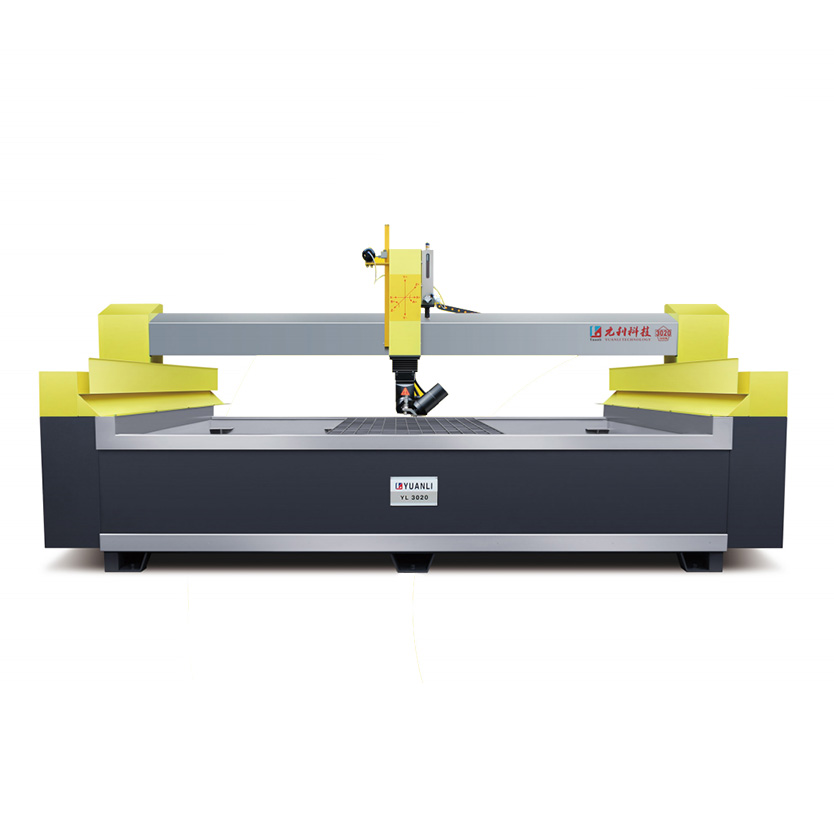
Integrating a Waterjet Cutting Machine serves as a strategic business move. It is not just a simple capability upgrade. This technology eliminates frustrating secondary processing bottlenecks completely. It empowers you to expand your addressable market share rapidly. In this article, you will discover the compelling reasons why adopting this advanced cold-cutting approach transforms modern manufacturing.
Zero Thermal Distortion: Cold cutting technology completely eliminates Heat-Affected Zones (HAZ), preserving material integrity and metallurgical properties.
Unmatched Versatility: Capable of processing virtually any material—from 10-inch titanium plates to fragile composites and glass—on a single machine.
Reduced Total Part Cost: Superior edge quality and tight nesting capabilities drastically reduce material waste and eliminate the need for costly secondary finishing operations.
Future-Proof ROI: Adding a waterjet cutting machine insulates job shops from supply chain shifts by allowing them to pivot across different industries and material demands seamlessly.
Thermal cutting methods often ruin expensive materials. Lasers and plasma cutters introduce severe micro-cracking, unintended hardening, and severe warping. You often have to scrap these parts. Alternatively, you must perform expensive secondary annealing to fix the metallurgical damage. This slows down production significantly.
The mechanics of cold cutting differ vastly from thermal melting. Abrasive waterjets rely on supersonic erosion. High-pressure water accelerates tiny pieces of garnet abrasive. They chip away microscopic pieces of material at room temperature. Heat never enters the workpiece. This completely eliminates the dreaded Heat-Affected Zone (HAZ).
Structural preservation is critical for demanding sectors. Aerospace and medical applications have strict manufacturing standards. Metallurgical changes are completely unacceptable when producing titanium airplane brackets or surgical implants. Cold cutting guarantees the material properties remain exactly as they were in the raw sheet.
Best Practice: Always provide material certifications to aerospace clients. You can easily prove the original temper remains unchanged after cold cutting.
Lasers have severe limitations. They struggle deeply when processing reflective metals like copper and brass. They also fail on thick materials or non-conductive composites. A waterjet ignores these restrictions completely. It processes virtually anything you place on the cutting bed.
You can target highly profitable materials effortlessly. Key examples include:
Carbon fiber and Kevlar composites
Tool steel and hardened metals
Inconel and exotic aerospace alloys
Natural stone, granite, and marble
Laminated glass and fragile ceramics
Common Mistake: Do not try to cut tempered glass. It shatters instantly. Laminated or standard annealed glass cuts perfectly.
Many traditional tools max out at an inch or two of thickness. A Waterjet Cutting Machine defies this limit easily. You can cut solid metals exceeding 10 inches in thickness. Remarkably, you do this without ever altering the cutting tool or changing the setup.
This capability transforms your business. It allows your shop to bid on lucrative heavy-industry contracts. Jobs previously out of reach suddenly become highly profitable. You can cut massive steel blanks for industrial machinery without breaking a sweat.
Cutting Method | Reflective Metals | Heat-Sensitive Composites | Thickness Over 5 Inches |
|---|---|---|---|
Laser Cutting | Poor / Challenging | Poor (Burns/Melts) | Incapable |
Plasma Cutting | Good | Incapable | Moderate (Rough edge) |
Waterjet Cutting | Excellent | Excellent | Excellent |
High labor costs constantly threaten job shop profit margins. Extended lead times often stem from manual finishing work. Your operators spend hours deburring parts, grinding edges, and removing hard dross. This manual labor wastes money. It creates production bottlenecks.
Abrasive waterjets produce a remarkably smooth, satin-like finish. You typically pull parts off the table ready for use. We call this a net-shape edge. It requires zero secondary grinding or milling.
Operators manipulate different cut quality ratings to manage efficiency. The industry uses a standard scale from Q1 to Q5.
Q1 (Separation): Fast, rough cut used purely for sizing raw materials.
Q3 (Standard): Good balance of speed and smoothness for general fabrication.
Q5 (Ultra-Smooth): Slow, high-precision finish required for critical mating surfaces.
You can balance speed and edge smoothness precisely. This allows you to meet varying client requirements profitably. Lower qualities save time. Higher qualities demand a premium price.
Clients increasingly demand intricate parts. Precision capabilities play a huge role in winning contracts. Most modern abrasive setups hold tolerances of +/- 0.001 to 0.003 inches. This precision rivals basic milling operations. The exact tolerance depends directly on the machine calibration and material thickness.
You can cut razor-sharp internal corners easily. Intricate, lace-like patterns pose no problem. Thermal methods often introduce stress fractures around sharp corners due to localized expansion. Cold cutting eliminates this threat completely. Parts remain stable and structurally sound.
Common Mistake: Programming corners too fast can cause "tailing." The abrasive stream lags behind the nozzle. Slower cornering speeds keep internal angles perfectly square.
Machine setup times drastically affect your daily throughput. Complicated fixturing devours expensive labor hours. Material waste also erodes your profit margins rapidly. These issues hurt both low-volume prototype runs and high-volume production jobs.
Traditional CNC milling exerts tremendous lateral force on parts. You need heavy-duty vises and complex clamping. Waterjet cutting exerts very low lateral forces. The high-pressure stream pushes downward onto the table grates. Most parts simply need minimal weighting or light edge clamping.
This eliminates the need for expensive custom fixtures. You enjoy rapid changeovers between completely different jobs. You can pull off a thick steel plate and immediately load a thin sheet of rubber. The setup time takes minutes, not hours.
Raw materials represent a massive expense. Yield optimization keeps costs low. The cutting stream possesses a very narrow kerf width. It typically measures just 0.030 to 0.040 inches thick. This thin cut allows you to pack parts incredibly close together.
Modern CAD/CAM software drives common-line cutting. Two parts share a single cut line. Tight nesting algorithms maximize your yield from expensive raw materials. You squeeze more aerospace alloys out of every single sheet. This extreme material optimization boosts your margins directly.
Job shops need flexibility. You must pivot rapidly. A Waterjet Cutting Machine delivers a seamless transition. You can cut a one-off rapid prototype in the morning. By the afternoon, you can run a massive high-volume production job.
Many systems feature multi-head configurations. You can run two, three, or four cutting heads simultaneously. The machine scales output directly to your current contract demands. You handle small custom requests and heavy industrial batch orders using the same equipment.
Shops often overlook the hidden realities of machine ownership. Environmental compliance hurdles become stricter every year. Operator safety concerns regarding traditional cutting fumes create insurance liabilities. You must address these issues head-on.
Lasers and plasma cutters produce severe hazards. They release noxious fumes, toxic off-gassing, and airborne metallic dust. These airborne hazards require expensive ventilation and filtration systems. Cold cutting solves this elegantly.
The process operates cleanly under a shallow layer of water. It captures all dust and particulate matter immediately. It emits no noxious fumes or toxic off-gassing. The working environment remains remarkably clean and safe for your operators.
Furthermore, shops utilize closed-loop water recycling options. They filter and reuse the water supply. The garnet abrasive is an entirely inert, natural mineral. You can safely dispose of it in standard commercial landfills. This drastically simplifies your environmental compliance strategy.
Every strategic investment requires realistic evaluation. You must weigh the initial capital expenditure against your new revenue-generating capabilities. The consumable costs include abrasive garnet, water, and power. You offset these directly by capturing new heavy-industry contracts and eliminating secondary finishing labor.
You must also acknowledge maintenance realities honestly. Shortlisting the right equipment requires comparing key hardware components.
Pump Selection: Evaluate intensifier pumps versus direct-drive pumps. Intensifier pumps are reliable and easier to rebuild for ultra-high pressures. Direct-drive pumps offer excellent energy efficiency but require different maintenance schedules.
High-Pressure Seals: Budget for periodic high-pressure seal replacements. Preventative maintenance keeps the machine running without unexpected downtime.
Abrasive Management: Consider adding an automated abrasive removal system. Manual tank clean-outs waste an entire day of production. Automated systems dredge the catch tank continuously while you work.
Best Practice: Stock spare seals, high-pressure tubing, and mixing tubes locally. This ensures your operators can handle routine maintenance quickly without waiting for shipping.
A waterjet is not just another cutting tool for your shop. It serves as a powerful strategic differentiator. It opens your business to entirely new markets. You can tackle extreme thicknesses, heat-sensitive composites, and intricate geometries profitably. It eliminates the headaches of thermal distortion completely.
Buyers should use a strict evaluation framework when selecting a vendor. Do not just look at the initial price tag. Evaluate vendors based on their pump reliability and long-term durability. Check the usability of their nesting software. Demand excellent aftermarket support and training. Most importantly, always ask the vendor to test-cut your specific materials before you sign the contract.
Your next step is simple. Reach out to a prospective vendor today. Request a custom ROI calculation or ask for a sample cut using your most difficult material. Witnessing the cold-cutting edge quality firsthand will validate its potential for your production floor.
A: A waterjet typically has a higher consumable cost per hour compared to a laser. It requires steady streams of abrasive garnet and high-pressure water. However, it offsets this higher hourly rate rapidly. It cuts significantly thicker materials and eliminates costly secondary processing. You save massive amounts of labor by avoiding deburring and heat-damage repairs.
A: The most common bottlenecks involve ultra-high-pressure components. High-pressure plumbing and pump seal degradation require regular attention. Additionally, manual abrasive removal from the catch tank stops production. We strongly emphasize the need for strict preventative maintenance schedules. Installing an automated abrasive removal system prevents tank-cleaning downtime completely.
A: A 90k PSI pump cuts materials significantly faster and uses less abrasive per minute. However, the extreme pressure makes components wear out faster. A 60k PSI pump remains the industry standard. It provides an excellent balance for general fabrication. It offers great reliability, lower maintenance costs, and highly consistent cutting performance.
A: Yes, it cuts fragile composites perfectly without delamination. You achieve this by utilizing low-pressure piercing capabilities. The machine initiates the pierce at a lower pressure to gently puncture the material. Once pierced, the software ramps up to high pressure for the rest of the cut. This prevents water from forcing the composite layers apart.


